
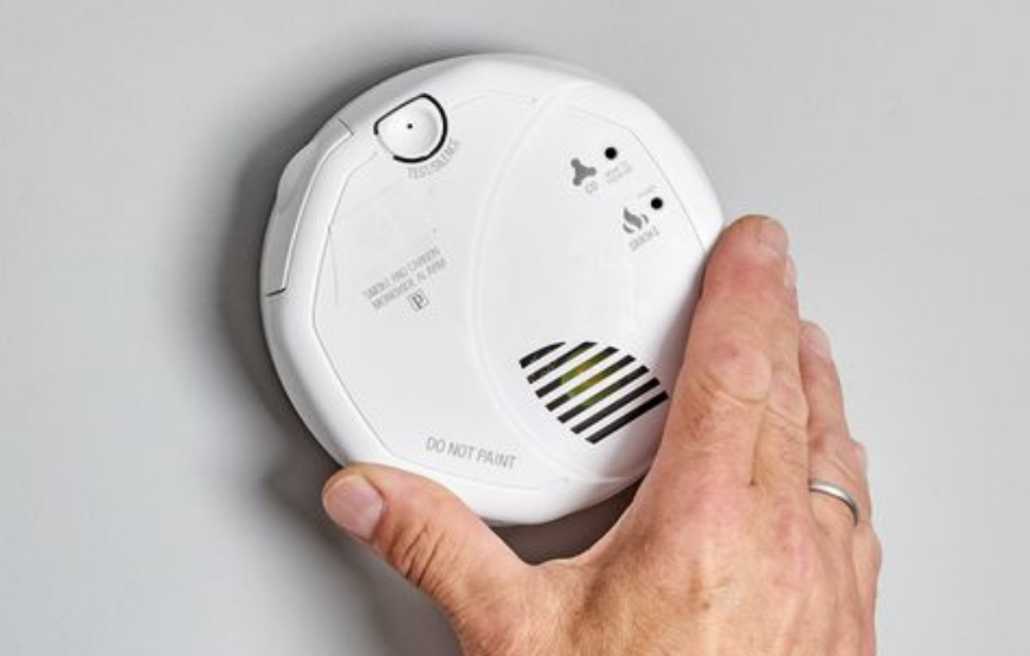
Smoke and CO Alarms: What Home Inspectors Check and Why
By Green Door Home Inspections | Castle Rock, CO
Smoke and carbon monoxide alarms come up on nearly every inspection we do — either because some are missing, because they’re old enough to be well past their useful life, or because clients have questions after reading their report. This post explains exactly what we inspect for, what we don’t, and what you should do after closing.
What We Inspect For
During a home inspection, we inspect for the presence of smoke alarms and carbon monoxide alarms in accessible areas. That’s the full scope. We note what we observed — present, not observed, or missing where one would be expected.
We do not test the devices. We do not verify alarm locations against any standard. Here’s why.
Why We Don’t Test
The test button on a smoke or CO alarm does one thing: it verifies that the horn works and the battery has enough charge to trigger it. It does not test whether the sensor inside the device can actually detect smoke particles or carbon monoxide gas. A detector can pass a button test and still fail to respond in a real emergency if the sensor has degraded.
This is why pressing the test button during a home inspection tells you almost nothing useful about whether the device will protect you. It’s also why our recommendation after closing is simple: replace every alarm in the house with new units. Don’t test the old ones and assume they’re fine.
InterNACHI’s Standards of Practice, which govern how we conduct inspections, do not require inspectors to operate alarm systems. Our scope is visual and presence-based.
Why We Don’t Verify Locations
Alarm placement requirements have changed significantly over the decades. A home built in 1988 was built to the standards of that time — which are different from what’s required today. Colorado does not require sellers to bring older homes up to current alarm placement standards at the time of sale.
This means we can’t look at an older home and flag a missing alarm in the upstairs hallway as a deficiency — because we don’t know what was required when that home was built, and the seller isn’t obligated to meet today’s standard. Trying to apply current requirements to every home regardless of age would produce inaccurate findings and mislead clients.
So we don’t do it. We note what’s present and visible. Placement verification is your job after closing — and it’s a straightforward one.
What the Current Standard Says
If you want to know where alarms should be in your home today, the authoritative source is NFPA 72, the National Fire Alarm and Signaling Code. The current requirements for residential properties:
Smoke alarms should be installed inside every sleeping room, outside every sleeping area, and on every level of the home including the basement. On levels without bedrooms, install in the living room, family room, or near the stairway to the upper level.
Carbon monoxide alarms should be installed outside each sleeping area and on every level of the home. CO alarms are required when there is any fuel-burning appliance in the home — furnace, water heater, gas range, fireplace — or an attached garage.
Some alarms combine both smoke and CO detection in a single unit, which counts for both.
The Date Problem
Smoke alarms have a recommended replacement interval of 10 years from the manufacture date. CO alarms are typically 5–7 years. The manufacture date is required to be printed on the unit — usually inside the cover or on the back.
In practice, most alarms we encounter don’t have the date visible without removing the unit, and many homeowners have no idea how old their alarms are. Yellowing plastic is a common indicator of age, but it’s not a precise measure.
This is another reason we recommend replacing everything after closing. You don’t know the history of those devices, and new alarms are inexpensive relative to what they protect against.
What to Do After Closing
Three steps:
Replace all alarms. Buy new smoke and CO alarms — combination units are fine — and install them throughout the home. Follow the placement guidelines in NFPA 72 or call your local fire department and ask them to walk you through it. Most fire departments are happy to help and some will come to your home.
Check the interconnection. In most modern homes, alarms are hardwired and interconnected — when one goes off, they all go off. If your home has battery-only alarms, consider upgrading to interconnected units when you replace them.
Put a reminder on your calendar. Test the audible alarm monthly. Replace batteries annually if they’re not hardwired. Replace the units themselves every 10 years from the manufacture date on the new units you install.
Bottom Line
Our job during the inspection is to tell you what was present and visible on the day we were there. Your job after closing is to make sure you’re protected going forward. On smoke and CO alarms, that means replacing everything, verifying placement, and not relying on whatever the previous owner had installed.
Questions about an alarm finding in a Green Door report? Call or text us at (720) 598-0111. We’re available 8am–8pm, seven days a week.
Green Door Home Inspections serves the greater Denver metro and southern Colorado, including Castle Rock, Parker, Lone Tree, Highlands Ranch, Centennial, Littleton, and surrounding areas. Same-day reports, every inspection.


My carbon monoxide detectir saved my life once when I was using my generator for power and the exhaust was shooting underneath my deck, into the crawl space access door, and thus into my home. Yeah, I’m smarter than that, but I did it.