Why a Pre-Drywall Inspection Is the One You Don’t Want to Skip
Buying a new build comes with a real advantage: you get to see the bones of the house before they’re covered up. Most buyers never use it.
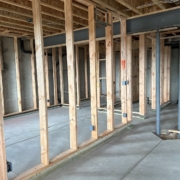
A pre-drywall inspection is exactly what it sounds like — we walk the home after framing, plumbing rough-in, and electrical rough-in are done, but before insulation and drywall go up. It’s the only window in the entire build where the walls, floor systems, ceilings, and behind-the-wall mechanicals are visible. Once drywall closes everything in, it’s gone for the next 30 to 50 years.
If you’re buying new construction in Castle Rock, Parker, Lone Tree, or anywhere in the Denver metro, this is the inspection you actually want — and the one your builder will try hardest to talk you out of.
What we look for behind the walls
Pre-drywall is a different inspection than a final walkthrough. We’re not looking at finishes or paint or whether a cabinet door is square. We’re looking at the things that are about to disappear forever behind drywall, insulation, and trim.
Framing. Cut joists, missing hangers, improperly notched studs, headers without proper bearing, floor systems that aren’t square. Some of this gets caught by municipal framing inspectors. A lot of it doesn’t. We’ve walked homes that passed municipal inspection and still had cut floor joists supporting tile bathrooms upstairs.
Plumbing rough-in. Drain slopes, vent stack routing, supply line locations, water heater connections, sewer line layout. A drain line with the wrong slope will work for a year, then start backing up. A vent stack that wasn’t tied in correctly causes slow drains and sewer gas smells — and the only way to fix it after drywall is to open the wall back up.
Electrical rough-in. Wire routing, junction box accessibility, panel layout, missing GFCI/AFCI provisions, conductor sizing for the loads they’re feeding, romex runs near sources of damage. We’ve found romex routed across exposed nail plates more than once. After drywall, you’d never know.
HVAC rough-in. Ductwork sizing and routing, return air placement, supply registers in rooms that need them, condensate line routing, refrigerant line set installation. Bad duct design becomes “this room is always cold” or “this room is always hot” for the next 20 years.
Foundation interaction with framing. Anchor bolts, sill plates, sealant at the foundation-to-frame transition, evidence of water intrusion before the building was fully closed in. Colorado expansive soils make this more important here than in most parts of the country.
Window and door rough openings. Flashing, sealing, header support, evidence the openings were squared and protected from weather before sheathing went up.
Why your builder will tell you it’s not necessary
You will likely hear some version of this from the builder’s sales rep or site superintendent:
“The home is inspected at every phase by the city/county and our internal QC team. A third-party pre-drywall inspection isn’t necessary.”
This sounds reasonable. It isn’t.
Municipal inspections check code compliance, not quality. A municipal inspector spends roughly 15 to 30 minutes per house and is checking for the minimum standard required to legally occupy the home. They’re looking at a small representative sample of conditions to confirm the build meets code. They are not walking every joist hanger, every plumbing connection, every electrical box. They cannot. They don’t have the time and that’s not their job.
The builder’s internal QC has a conflict of interest. The builder’s QC team works for the builder. Their job is to keep the build moving and protect the company. They are not a buyer advocate. Even when they’re conscientious and thorough — and many are — they are not your representative in the transaction.
The builder benefits from you not having an inspection. If we find something during pre-drywall, the builder has to fix it before drywall goes up. That costs them time and money. If you don’t have someone walking the home, that issue gets buried under drywall and becomes your problem in year three, when fixing it costs ten times as much.
When a builder pushes back hard on pre-drywall inspections, that is not reassurance. That is information.
What pre-drywall costs you vs. what it can save you
A pre-drywall inspection on a typical Denver metro new build is a few hundred dollars. The fixes we identify, if any, are paid for by the builder under warranty — because the home isn’t finished yet and the items haven’t been signed off on.
Compare that to finding the same issues at the 11-month warranty inspection, after you’ve lived in the home for a year. By then, the builder is less responsive, change orders cost more, repairs require opening up finished walls, and some items aren’t covered at all. The same defect that would have cost the builder one hour and $40 of materials at the framing stage becomes a $4,000 repair you pay for after closing.
This is the actual math on pre-drywall: small upfront cost, large downside protection, and the only window in the build where the cost of fixing something is borne by the builder.
When pre-drywall has to happen
Timing matters. Pre-drywall is a narrow window, usually between 2 and 5 days, after rough-in is complete and before insulation and drywall start going up. Miss it and you can’t go back.
The build phases generally go: dirt, foundation, framing, sheathing and roof, mechanical rough-in (plumbing, electrical, HVAC), then pre-drywall window, then insulation, then drywall, then finishes.
The builder will not always tell you when the window opens. Their incentive is to keep the build moving. You should ask the site superintendent directly: “When will rough-in be complete? I want my inspector on site before insulation starts.” Then follow up two weeks before that date.
If we’re handling your inspection, just tell us your closing date and the builder’s name when you book, and we’ll coordinate timing with the site directly so you don’t have to.
Pre-drywall is one of three inspection points on a new build
Pre-drywall is the most important inspection on a new construction home, but it’s not the only one. The full set looks like this:
Pre-drywall. Everything behind the walls, before they close up. The one this post is about.
Pre-closing (final walkthrough). Everything you can see in the finished home. Cosmetic issues, appliances, finishes, mechanical operation, exterior. This is the inspection most buyers default to when they think “new construction inspection.” It’s worth doing, but it catches different issues than pre-drywall, and finishes are easier to fix than framing.
11-month warranty. The inspection done before the builder’s one-year warranty expires. Catches anything that has shown up in the first year of living in the home — settling cracks, drainage issues, HVAC performance, items that didn’t appear right at closing.
Each of the three catches things the others can’t. We do all three, and we keep notes between inspections so the warranty inspection isn’t starting from zero. If you’re not sure which you need, just call — we’ll walk you through it based on where you are in the build.
Bottom line
The pre-drywall inspection is the only chance you get to see the home before it gets covered up. Builders will discourage it because it costs them time when something needs to be fixed. Municipal inspections are not a substitute — they’re checking code, not quality, and they don’t represent you. The cost is small, the timing window is narrow, and the protection is real.
If you’re buying new construction in the Denver metro and you haven’t booked a pre-drywall inspection yet, call or text us at (720) 598-0111. We’ll coordinate the timing with your builder directly. Same-day report, photos and video included, and we’re available to walk you through anything we find afterward.
Green Door Home Inspections serves new construction buyers throughout the Denver metro, including Castle Rock, Parker, Lone Tree, Highlands Ranch, Aurora, and the surrounding communities. We work for you — not the builder.