
Do I Need a Well Inspection When Buying a Home in Colorado?
If the home you are buying has a private well, yes. You need a well inspection, and it should include two things: a flow and yield test of the well system, and lab testing of the water itself. Nobody regulates a private well except the person who owns it. The EPA rules that protect city tap water do not apply to private wells. The only way to know what is coming out of that tap is to test it before you close.
Many buyers around Castle Rock, Elizabeth, Larkspur, Sedalia, and the Park County foothills are surprised to learn this. If you have only ever lived on city water, a well is a system you have never had to think about. Here is what a proper well inspection covers and why the water test is not optional.
What does a well inspection actually include?
A complete well and water inspection has three parts.
A flow and yield test. The well system runs continuously for a full hour while flow readings are taken at set intervals. This shows whether the well, pump, and pressure tank can deliver water at a sustained rate instead of just the first few minutes. A well that produces strong flow for five minutes and then fades is a very different property than one that holds steady for the full hour.
Lab water testing. Water samples are collected before any other water runs in the home and delivered the same day to a state-certified laboratory. Our standard panel covers total coliform bacteria and E. coli, nitrate, nitrite, and a first-draw lead sample. That lines up with what HUD and the EPA use as the baseline for drinking water on a home purchase.
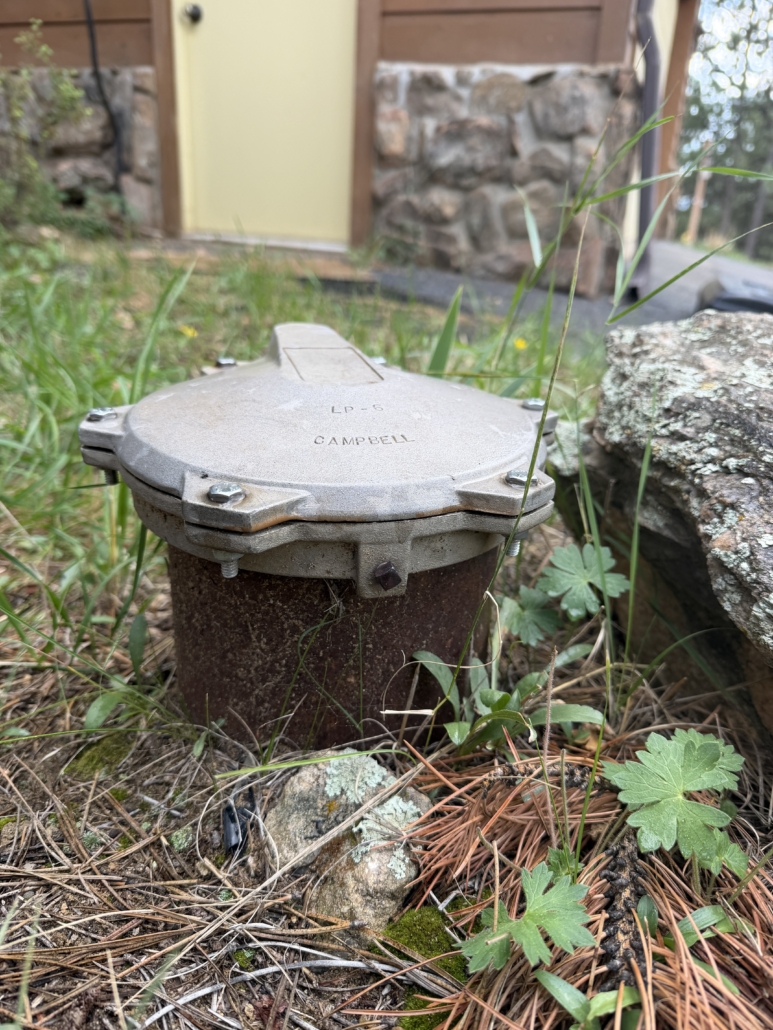
A visual evaluation of the accessible well equipment. The wellhead, pressure tank, and pressure gauge behavior are all evaluated as part of the inspection. We do not open the well or pull the pump. No home inspector should.
Why does the water need lab testing? It looks fine.
The contaminants that matter are the ones you cannot see, smell, or taste. Coliform bacteria and E. coli mean surface water or septic effluent is reaching the well. Nitrate and nitrite often come from fertilizer or septic systems and are a real risk for infants. Lead comes from the home’s own plumbing. That is why the lead sample is taken as a true first draw before a single faucet runs.
None of these announce themselves. Crystal clear water fails bacteria tests all the time. That is why the samples go to a certified lab instead of being read off a test strip in the driveway.
Will my lender require a well water test?
If you are using an FHA, VA, or USDA loan on a home with a private well, plan on it. These programs typically require water testing from a certified lab before closing. The panel above is built to match that baseline. If your lender has specific requirements beyond the standard panel, get them in writing early and send them to us before the inspection date so the right samples are collected in one trip.
One thing worth knowing about how we report. We do not stamp a well pass or fail. We report the measurements. Your lender and loan program decide what meets their requirements, and you get the actual numbers to make your own decision. It is the same philosophy behind the rest of our home inspection reports.
How long does it take, and when do results come back?
The flow test and sampling happen during the inspection visit. The well portion of your report is delivered the same day, like everything else we do. The water samples go to the lab that same day and results typically come back in five to seven business days. On a standard Colorado inspection timeline, that means booking promptly after going under contract so the lab results land inside your objection deadline.
Can this be done with my regular home inspection?
Yes, and that is the best way to do it. We perform the well and water inspection in-house as an add-on to the full home inspection. One appointment, one company, one report to work from. It is also available as a standalone service if you only need the well evaluated. Current pricing for both is on our inspection cost guide.
Frequently asked questions
How should the home be prepared for the water test?
The lab standard for the lead sample is at least six hours of no water use at the collection faucet before samples are taken. We notify the listing agent before the appointment so the occupants know not to run water that morning. If water was used, we document it and the report notes the condition.
Does Colorado require a well inspection when buying a home?
No. Colorado does not require a well inspection or water test as a condition of sale. That responsibility falls entirely on the buyer, which is exactly why it belongs in your inspection period. Your lender may require the water test even though the state does not.
What happens if the lab finds bacteria in the water?
The report gives you the lab’s measurements and you take it from there in your negotiation. Wells with bacteria hits are commonly disinfected by a well contractor and retested. Knowing before closing means it is the seller’s problem to solve, not your surprise after move-in.
Do you test homes on city water too?
Our well and water inspection is built for private wells, where the flow test and the water test belong together. We never test water on its own without the well evaluation. Half the picture is not enough to make a decision on.
Green Door Home Inspections provides residential inspections, radon testing, sewer inspections, mold testing, and well and water inspections to Castle Rock, Aurora, Denver, and the Front Range. Call or text us at 720-598-0111 or use the online scheduler to set up your inspection.






Leave a Reply
Want to join the discussion?Feel free to contribute!